Learn
Contract Logistics: What It Covers, Costs and When It Fits
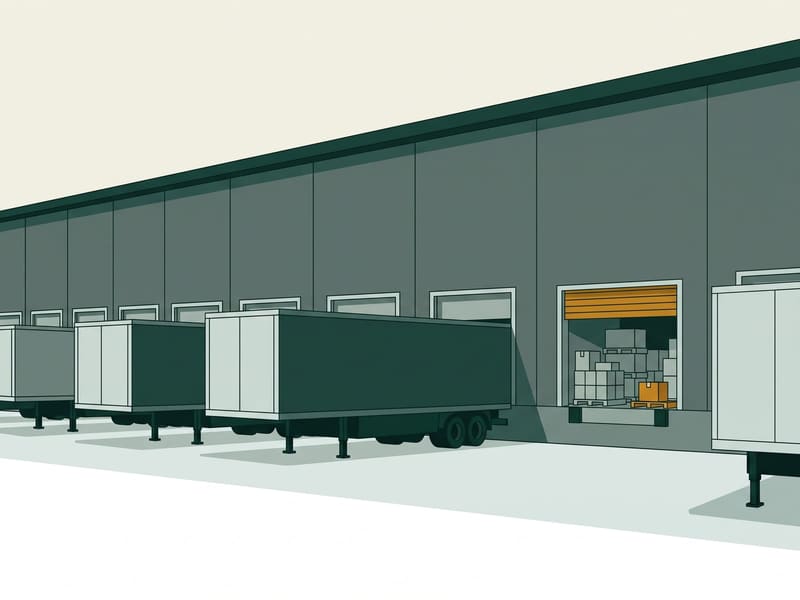
Contract logistics is outsourcing on a long lease: a provider runs your warehousing, fulfillment, transport or all 3 under a multi-year agreement built around your operation. It sits at the tailored end of third-party logistics, where the space, staff, systems and prices are set for you rather than taken off a rate card. We cover what these contracts include, how they are priced and ended, and when a growing brand is ready for one.
Quick summary
- Contract logistics means a provider runs part or all of your logistics under a multi-year, tailored agreement, instead of a standard rate card you can leave at short notice.
- Armstrong & Associates tracks 3PL and contract logistics as one US market, worth $323.4 billion in 2025, with contract warehousing and distribution at $72.7 billion of it.
- Contract warehousing deals typically run 1 to 3 years and some 10 or more, while dedicated contract carriage runs 1 to 7 years, by Armstrong & Associates' account.
- Pricing comes as a per-unit rate card, open-book cost plus a management fee, or a fixed fee plus per-unit rates, sometimes with a share of the savings.
- Settle volume bands, a joint review 6 months after go-live and a transition plan before signing, because the exit terms decide what the contract costs in a bad year.
What contract logistics means
Contract logistics is a trade of commitments. The provider commits space, staff, equipment and systems to your operation for several years, and you commit volume in return. That is the difference from a standard 3PL arrangement, where you take a spot on a shared floor at published rates and can leave at short notice.
Every contract logistics provider is a third-party logistics provider, and Armstrong & Associates reports the US industry as a single 3PL and contract logistics market, worth $323.4 billion in 2025, up 5.0%. Contract warehousing and distribution center management made up $72.7 billion of that. What separates contract logistics is the length, the tailoring and what each side has promised.
Contract logistics vs a standard 3PL service
| Standard 3PL service | Contract logistics | |
|---|---|---|
| Term | Month to month or 1 year | Several years, set in the contract |
| Pricing | Published rate card | Negotiated: open book, management fee or custom rates |
| Space | Shared with other clients | A dedicated building or zone |
| Staff | A crew shared across accounts | A team hired and trained for your operation |
| Systems | The provider’s standard WMS and integrations | Configured around your ERP, customers and reporting |
| Your commitment | A monthly minimum | Volume bands for the whole term |
| Leaving | Notice, then freight your stock out | Exit terms, transition support and equipment ownership |
The space row is the same decision any brand faces in shared versus dedicated warehousing. Contract logistics is what the dedicated option becomes once transport, returns and systems are folded into the same agreement.
What a contract logistics deal covers
A contract can cover one of these or all of them:
- Dedicated warehousing and distribution: a building or zone run for you, with racking and automation set up for your products.
- Order fulfillment: DTC parcels, retail orders under routing guides, or both, often from a fulfillment center laid out for your order profile.
- Dedicated contract carriage: trucks, drivers and management supplied for your routes. Armstrong & Associates puts this segment at $32.0 billion in 2025, on agreements typically running 1 to 7 years.
- Value-added services: kitting, labeling, repacking, light assembly and retail display builds.
- Returns and after-sale work: grading, repair, repackaging and recycling.
- Systems integration: the warehouse and transport management systems linked to your ERP and to your retail customers’ EDI.
The model shows up wherever the work is specialized: food and beverage with lot tracking, healthcare with temperature control, manufacturers needing parts fed to assembly lines just in time, and consumer brands with strict store delivery rules.
How contract logistics is priced
There is no rate card to compare. Each deal is built from 3 structures, alone or mixed:
- Rate card: a negotiated price per unit, order or pallet. Simple to budget, and the provider carries the risk if volume falls.
- Open book: you see the real cost of labor, space and equipment and pay it plus a management fee. Transparent, but you carry the volume risk.
- Fixed plus variable: a fixed monthly charge for the building and management, plus per-unit rates for the work.
Any of the 3 can carry a gainshare, in which you and the provider split savings against an agreed baseline. Armstrong & Associates describes the same building blocks in managed transportation: a management fee per shipment or as a percentage of the freight bought, and in some deals a gainshare that divides the savings between provider and shipper.
Contract length and exit terms
Armstrong & Associates says contract warehousing deals usually run between 1 and 3 years, and a few stretch to 10 years or beyond. Long terms buy what month-to-month space cannot: racking and automation built for your products, a team that knows them, and lower rates. They also hold you through a bad year, which is why the volume and exit terms matter more than the headline price.
A long contract stays honest through 2 habits. Hold a joint review of the cost base and service standards about 6 months after go-live, when both sides finally know what the operation costs to run. After that, review KPIs together every month, with the people who run the floor in the room.
Is contract logistics right for a growing brand?
Good fit:
- Volume that fills a building all year, not only at peak.
- Custom work at scale: automation, compliance or kitting that a shared floor cannot schedule around.
- Retail and B2B rules: routing guides, EDI and delivery windows for several large customers.
- Several channels from one site: DTC, marketplace and wholesale drawing on one pool of stock.
- Special handling: temperature control, hazmat or high-value security.
Stay on a rate card:
- Volume still swings sharply between months or years.
- You cannot forecast 2 years out with any confidence yet.
- A shared floor already fits, and dedicated space would save little.
A contract logistics provider runs the operation. Managing several providers on your behalf is a 4PL’s job, and some providers sell both under one agreement.
What to settle before you sign
The last item is the easiest to overlook. When warehousing and transport sit in separate contracts with separate providers, every late delivery becomes an argument about whose fault it was, and you are the one left refereeing it.
Frequently asked questions
What is contract logistics?
Contract logistics is the outsourcing of warehousing, fulfillment, transport or returns to one provider under a multi-year agreement tailored to your operation. The provider commits space, staff and systems, and you commit volume. It is the long-term, customized end of third-party logistics.
What is the difference between contract logistics and a 3PL?
Contract logistics is a kind of 3PL service rather than a separate industry. A standard 3PL arrangement runs on a shared floor and a published rate card with short notice periods, while contract logistics uses dedicated space, a trained team and negotiated pricing over several years. The same provider often sells both.
How long is a contract logistics agreement?
Armstrong & Associates puts most contract warehousing agreements at 1 to 3 years, with some running 10 years or longer. Dedicated contract carriage agreements typically run 1 to 7 years. Longer terms usually come with more investment in the site from the provider.
Is contract logistics only for large companies?
Mostly, but not only. It pays once your volume keeps a dedicated team and space busy all year, or when you need custom handling a shared floor cannot give you. Growing brands usually start with a shared 3PL and move to a contract once they have 1 to 2 years of stable data.
Can you end a contract logistics agreement early?
Only on the terms written into it. Agreements usually set a notice period, early termination charges and rules for moving inventory, data and any equipment bought for the site. Negotiate those terms at signing, because they are hard to change afterward.
What is dedicated contract carriage?
Dedicated contract carriage is a transport arrangement in which a logistics provider supplies trucks, drivers and management for one shipper's routes. Armstrong & Associates puts the US segment at $32.0 billion in 2025, with agreements typically running 1 to 7 years.
What are the 3 types of logistics?
The usual split is inbound logistics (goods coming in from suppliers), outbound logistics (goods going out to customers) and reverse logistics (returns, repairs and recycling). A contract logistics agreement can cover any or all 3 under one provider.